
Why Your Website Gets Traffic but No Enquiries: How to Turn Website Visitors into Leads?
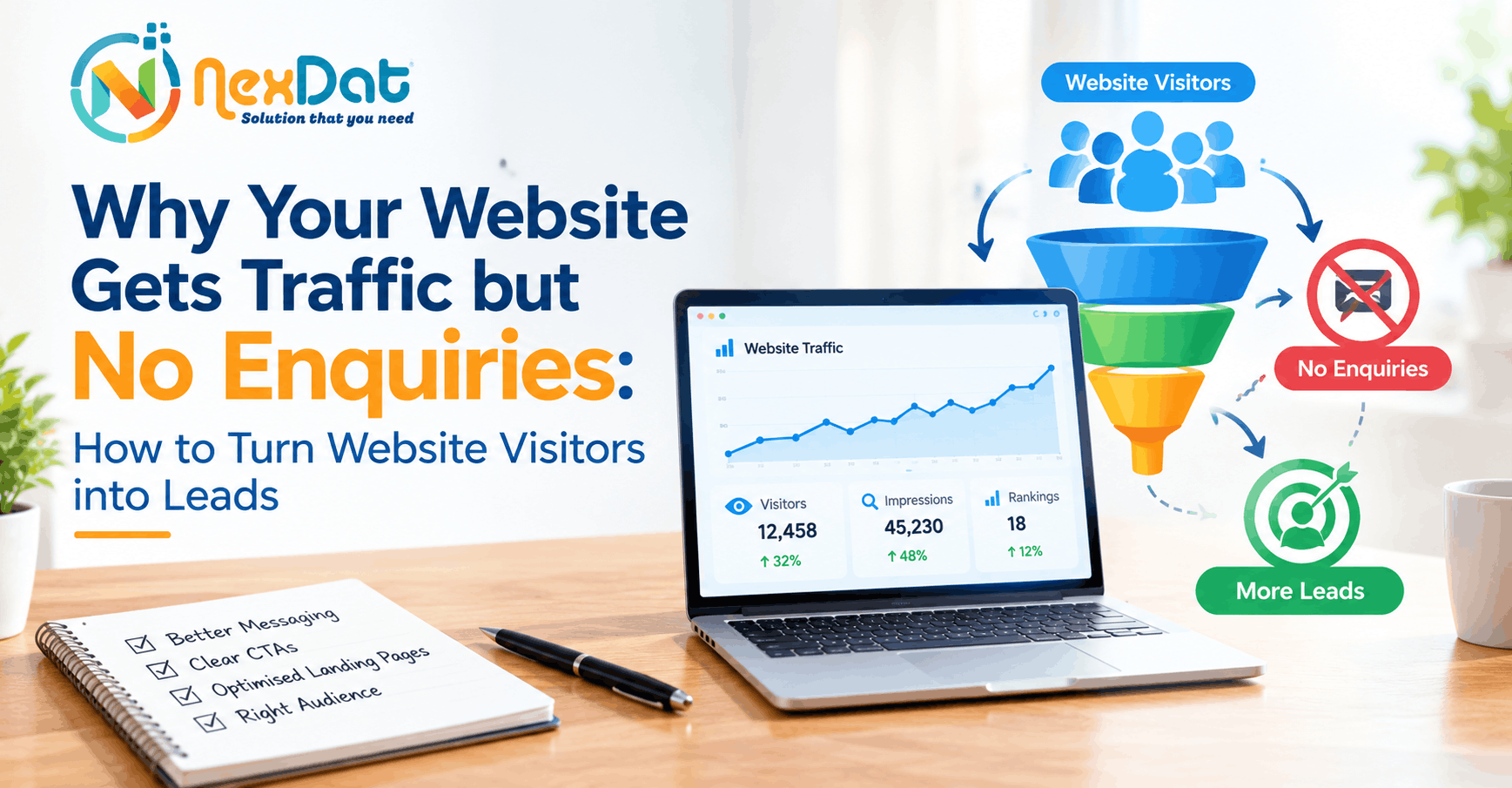
You have invested in SEO, Google Ads, social media and website marketing. Your Google Analytics reports show visitors coming to your website, your search impressions are increasing, and some of your pages may even be ranking well on Google.
But there is one problem: the enquiries are not coming in.
If your website gets traffic but no enquiries, the problem may not be the amount of traffic you receive. It could be the quality of your visitors, your website messaging, user experience, landing pages, calls to action or the overall conversion journey.
A successful business website should do more than attract visitors. It should help turn relevant visitors into leads, enquiries and customers.
Traffic Does Not Always Mean Potential Customers
One of the biggest mistakes businesses make is assuming that more website traffic automatically means more enquiries.
It doesn’t.
You could receive thousands of visitors every month, but if those visitors are not interested in your products or services, they are unlikely to contact you.
For example, someone searching for:
“How does SEO work?”
has a different level of buying intent from someone searching for:
“SEO agency for small business UK.”
Both searches can generate website traffic, but the second visitor is much closer to making an enquiry.
This is why SEO keyword targeting and search intent are so important.
Your digital marketing strategy should focus not only on increasing traffic but on attracting the right audience.
01.
Your Website May Be Attracting the Wrong Traffic

If your website is ranking for informational keywords but not commercial keywords, you may be attracting people who are looking for information rather than services.
Look at your:
- Google Search Console queries
- Google Analytics traffic sources
- Landing pages
- Keyword rankings
- Organic search traffic
- Paid advertising campaigns
- Conversion data
Ask yourself:
Are the people visiting my website actually looking for what I sell?
If the answer is no, increasing traffic further may not solve the problem.
A strong SEO strategy should balance informational content with commercial and transactional keywords that can generate qualified leads.
02.
Visitors Do Not Understand What You Offer

When someone lands on your homepage, they should quickly understand:
- What your business does
- Who you help
- What problem you solve
- Why they should choose you
- What they should do next
If your homepage headline is vague, visitors may leave before exploring your services.
Instead of using generic statements such as:
"Welcome to our innovative digital solutions."
make your value proposition more specific.
For example:
“SEO and Digital Marketing Services That Help Your Business Generate More Qualified Leads.”
The second message immediately communicates the service and potential outcome.
Your website copy should focus on customer problems, solutions and benefits, rather than simply describing your business.
03.
Your Calls to Action Are Too Weak

A visitor may be interested in your service but still not contact you because your website does not clearly tell them what to do next.
A simple “Contact Us” button can work, but a more specific call to action can communicate greater value.
Consider using:
- Get Your Free Website Audit
- Request a Free Consultation
- Get a Digital Marketing Quote
- Book a Strategy Call
- Talk to Our SEO Experts
- Get Your Free SEO Audit
Your call to action (CTA) should be visible without becoming intrusive.
Place relevant CTAs throughout important pages, particularly after explaining your service, benefits, results and trust signals.
04.
Your Landing Pages Are Not Built for Conversion

A landing page should have a clear purpose.
If someone clicks a Google Ads campaign for local SEO services, sending them to a generic homepage may create unnecessary friction.
Instead, create a dedicated landing page that matches the search or advertising intent.
A strong landing page should include:
- A clear headline
- Relevant service information
- Benefits and outcomes
- Trust signals
- Testimonials or reviews
- Relevant case studies
- A clear CTA
- Simple enquiry forms
- Contact information
- Mobile-friendly design
This is where landing page optimisation and conversion rate optimisation (CRO) can make a significant difference.
05.
Your Website Does Not Build Enough Trust

Visitors may be interested in your service but still hesitate to make contact.
Why?
Because they don’t know whether they can trust your business.
Trust can be built through:
- Customer reviews
- Testimonials
- Case studies
- Client logos
- Certifications
- Awards
- Industry experience
- Before-and-after examples
- Results and statistics
- Clear contact information
- Professional website design
If you provide digital marketing services, for example, don’t simply say that you deliver “excellent results.”
Show visitors what you have achieved.
Evidence is more persuasive than promises.
06.
Your Website Is Difficult to Use on Mobile

A large proportion of modern website visitors use smartphones.
If your website looks good on a desktop but is difficult to navigate on mobile, you could be losing potential customers.
Check whether:
- Text is easy to read
- Buttons are large enough to tap
- Forms work correctly
- Menus are easy to use
- Images load properly
- Pages load quickly
- Important information appears without excessive scrolling
- Phone and enquiry buttons are easy to find
A good mobile-friendly website should make it simple for someone to understand your offer and contact your business from any device.
07.
Your Website Is Too Slow

Website speed affects user experience.
If visitors have to wait for pages, images or interactive elements to load, they may leave before reaching your enquiry form.
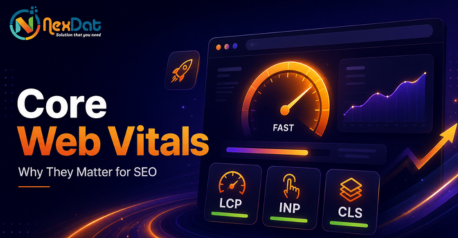
Check your website’s performance using tools such as Google PageSpeed Insights and review key Core Web Vitals metrics.
Improving:
- Page speed
- Image optimisation
- Hosting performance
- JavaScript loading
- CSS delivery
- Mobile performance
can create a smoother experience for visitors.
Website performance should therefore be considered as part of both technical SEO and conversion optimisation.
08.
Your Enquiry Form Is Asking for Too Much

Imagine a visitor wants to request a quote, but your contact form asks for:
- Full name
- Company name
- Address
- Telephone number
- Job title
- Company size
- Budget
- Project details
- Marketing goals
- Additional information
They may simply decide it is easier to leave.
Keep your initial enquiry process as simple as possible.
Depending on your business, you may only need:
Name + Email/Phone + Short Message
You can collect additional information later during the sales process.
The objective is to remove unnecessary conversion friction.
09.
Your Website Does Not Give Visitors a Reason to Act

Depending on your business model, you could offer:
- Free website audits
- Free consultations
- Free SEO audits
- Initial strategy calls
- Website health checks
- Bespoke quotations
- Downloadable guides
- Helpful checklists
For example:
“Get Your Free Website Audit and Discover What’s Preventing Your Website from Generating More Leads.”
This gives visitors a clear reason to take the next step.
10.
You Are Not Tracking Enquiries Properly
Sometimes a business believes its website generates no enquiries simply because conversions are not being tracked correctly.
Your website analytics and conversion tracking should monitor actions such as:
- Contact form submissions
- Phone calls
- WhatsApp clicks
- Email clicks
- Quote requests
- Consultation bookings
- Downloads
- Purchases
Google Analytics and Google Search Console can provide useful information about traffic and search performance, but businesses should also ensure important conversion actions are properly configured.
If you don’t measure conversions, you cannot accurately identify where potential customers are being lost.
11.
Find Where Visitors Are Leaving
For example:
Google Search → Service Page → Contact Page → Enquiry Form → Lead
If thousands of people reach your service page but very few reach your contact page, the service page may need improvement.
If visitors reach your enquiry form but don’t submit it, the form or CTA may be creating friction.
Tools such as heatmaps and session recordings can also help you understand how visitors interact with important pages. The reference article similarly recommends using tools such as Hotjar or Microsoft Clarity to identify scrolling, clicking and drop-off behaviour.
12.
Your SEO and Conversion Strategy Need to Work Together
SEO should not simply be about getting your website to rank for more keywords.
The bigger goal is to attract people who are likely to become customers.
A strong SEO and lead generation strategy connects:
Search Intent → Relevant Keyword → Optimised Landing Page → Trust → CTA → Enquiry
For example, ranking for:
“what is digital marketing?”
may generate informational traffic.
Ranking for:
“digital marketing agency for small business”
has much stronger commercial intent.
This doesn’t mean informational keywords are useless. Educational content can build awareness, authority and trust. But your website should also have pages targeting users who are closer to making a purchasing decision.
How Nexdat Can Help Improve Your Website Conversion Rate
At Nexdat, we understand that getting website traffic is only one part of digital marketing.
Your website should support your wider business goals by attracting the right audience and giving potential customers a clear reason to take action.
Our digital marketing approach can combine:
- SEO services
- Local SEO
- Google Ads
- Meta Ads
- Website design and development
- Conversion rate optimisation
- Content marketing
- Google Business Profile optimisation
- E-commerce marketing
- Social media marketing
- Technical SEO
- Website performance optimisation
We can analyse your existing website, identify potential conversion barriers and develop a strategy designed to turn more relevant visitors into enquiries.
Final Thoughts: More Traffic Is Not Always the Answer
- 1-First, look at the complete customer journey.
- 2-Are you attracting the right audience?
- 3-Is your website message clear?
- 4-Does your landing page match the visitor's search intent?
- 5-Can visitors easily find your CTA?
- 6-Does your website demonstrate trust?
- 7-Is your contact form simple?
- 8-Does the website work properly on mobile?
- 9-Are you tracking conversions correctly?
These improvements can help transform your website from a simple online brochure into a lead generation website that supports business growth.
At Nexdat, we believe digital marketing should focus on more than clicks and traffic. The real value comes from attracting the right people and turning their interest into meaningful business enquiries.