
How Much Does a Business Website Cost in the UK in 2026?

If you’re planning to build a new website for your business, one of the first questions you’re likely to ask is: how much does a business website cost in the UK in 2026?
The answer can vary significantly.
A simple five-page website for a local business is very different from a custom website with advanced functionality, e-commerce, booking systems, CRM integrations and ongoing SEO.
In 2026, UK businesses can find website solutions ranging from a few hundred pounds for a DIY or template-based website to £10,000+ for a bespoke, conversion-focused website. Current UK pricing guides commonly place professional small-business websites somewhere in the low thousands, although the final price depends heavily on the scope and objectives of the project.
So, rather than looking only at the headline price, it is important to understand what you’re actually paying for.
In this guide, Nexdat breaks down the typical website design cost in the UK, what affects the price, ongoing website costs and how to choose the right website package for your business.
Quick Answer: How Much Does a Business Website Cost in the UK?
As a general 2026 guide:
| Website Type | Typical UK Cost |
|---|---|
| DIY Website Builder | £100–£600+ per year |
| Basic Template Website | £500–£1,500+ |
| Professional Small Business Website | £1,500–£5,000+ |
| Custom WordPress Website | £3,000–£10,000+ |
| E-commerce Website | £3,000–£15,000+ |
| Bespoke/Complex Website | £10,000+ |
These are indicative market ranges rather than fixed prices. The number of pages, design requirements, functionality, content, SEO, integrations and ongoing support can all change the final cost.
What Determines the Cost of a Business Website?
There isn’t a single price for a website because every business has different requirements.
The biggest factors include:
1. Number of Pages
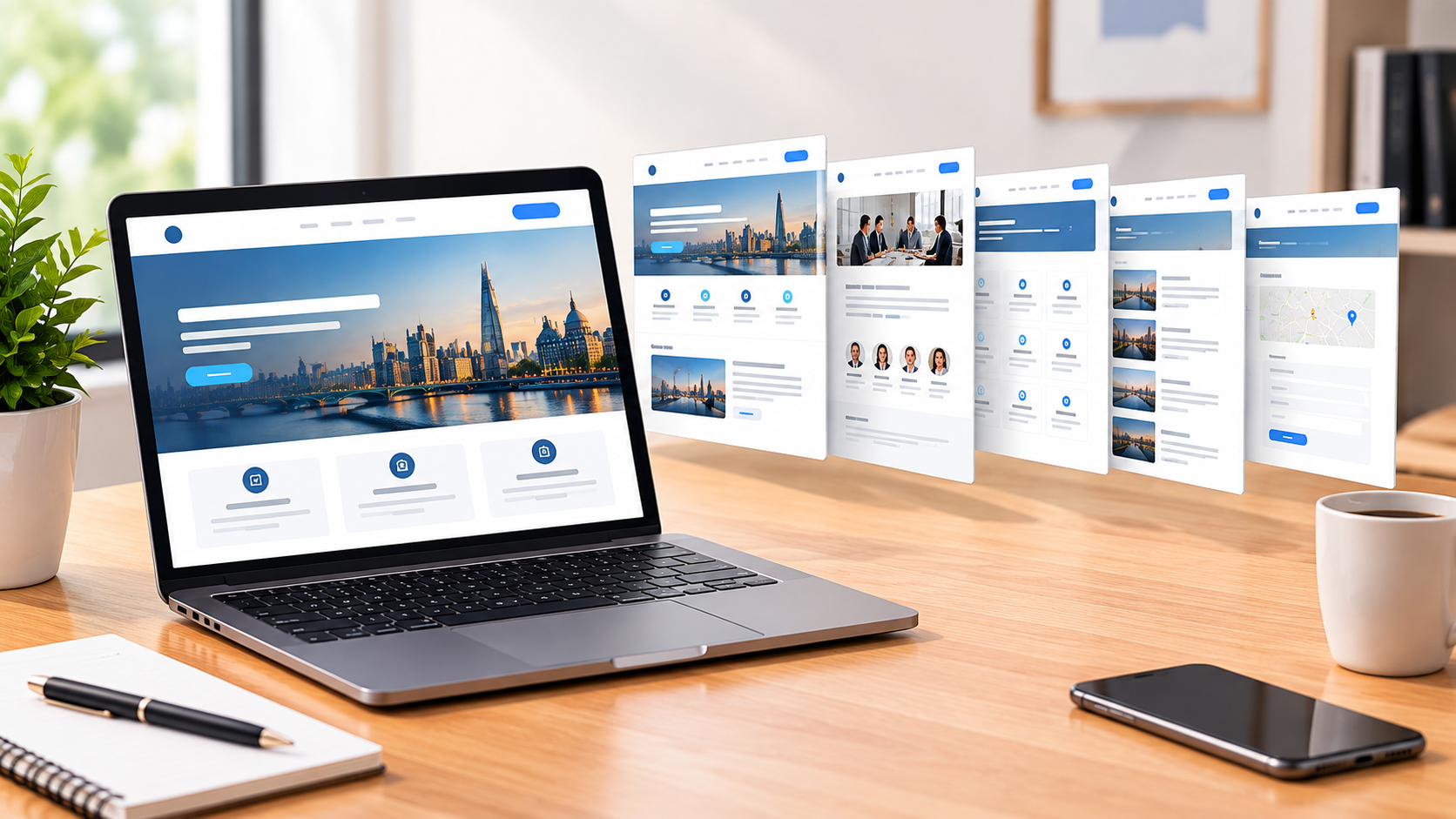
A five-page brochure website requires considerably less work than a 30-page website with dedicated service, location, case study and blog pages.
A typical small-business website might include:
- Home
- About Us
- Services
- Individual service pages
- Case Studies
- Blog
- Contact
The more pages you require, the more time may be needed for planning, design, content creation, development and SEO.
2. Website Design

Website design is another major factor in determining the overall cost of website design in the UK.
A template-based website can be relatively inexpensive because the underlying layout already exists.
A bespoke website, however, may involve:
- Custom layouts
- Brand-focused design
- Custom graphics
- User journey planning
- Mobile-first design
- Conversion-focused sections
- Interactive elements
- Bespoke animations
3. Website Development
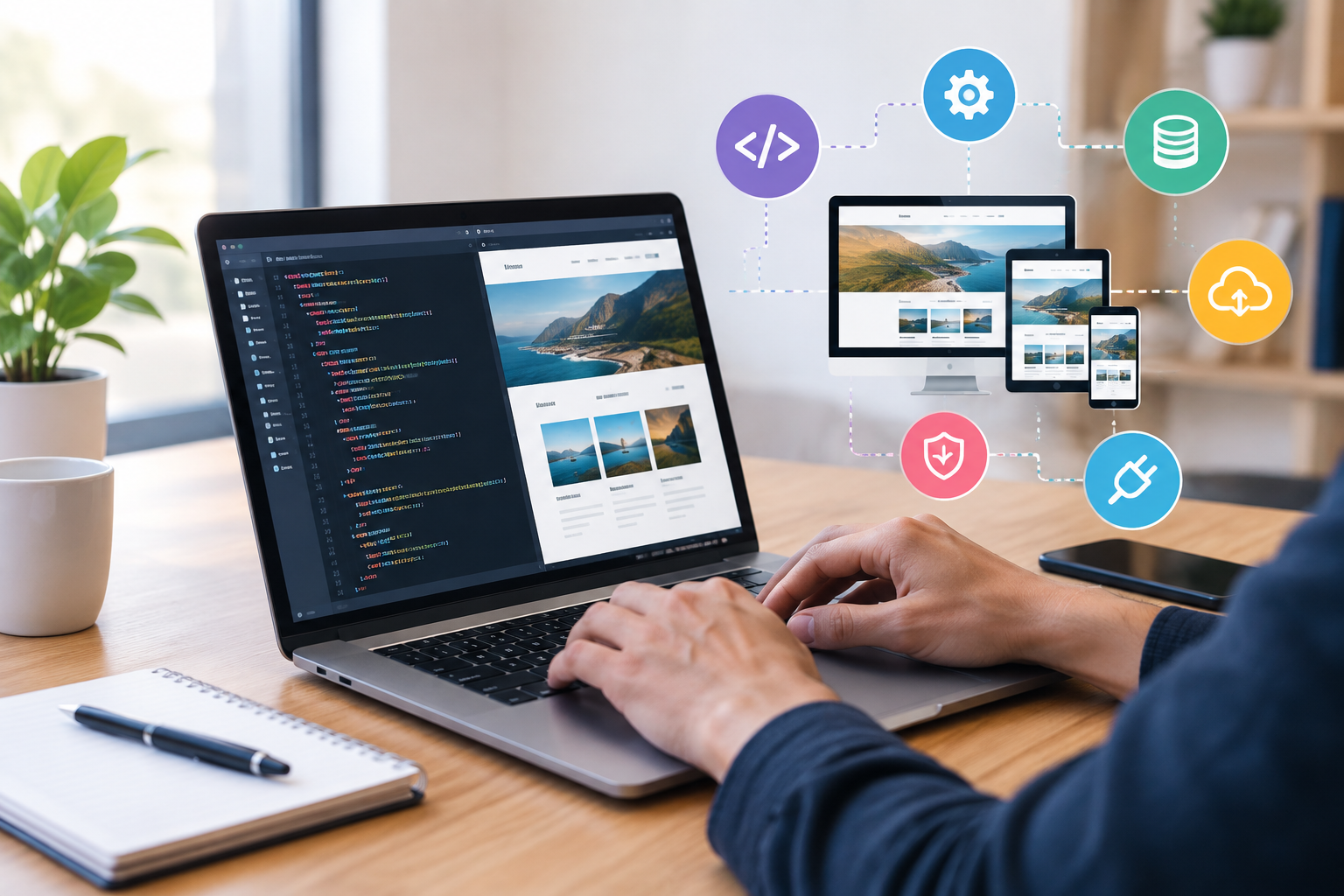
Design is only one part of building a website.
Developers need to turn the design into a functioning website that works across desktop, tablet and mobile devices.
Development costs can increase when your website requires:
- Custom functionality
- Membership systems
- Booking systems
- Customer portals
- CRM integrations
- API integrations
- Payment gateways
- Product databases
- Advanced forms
- Third-party software
4. Content Writing

Website content is sometimes overlooked when businesses calculate their website development cost.
Your website needs more than attractive images.
Good content should explain:
- What your business does
- Who you help
- Your products or services
- Your competitive advantages
- Why customers should trust you
- How customers can contact you
5. Search Engine Optimisation

A website can look fantastic and still struggle to generate organic traffic.
This is why SEO should ideally be considered during the website build rather than added as an afterthought.
A good website SEO setup can include:
- Keyword research
- SEO-friendly page structures
- Meta titles and descriptions
- Heading optimisation
- Internal linking
- Image optimisation
- Schema markup
- XML sitemap
- Robots.txt configuration
- Technical SEO
- Mobile optimisation
- Page speed improvements
6. E-commerce Functionality

If you’re selling products online, your website will require additional functionality.
An e-commerce website may need:
- Product pages
- Shopping basket
- Checkout
- Online payments
- Customer accounts
- Stock management
- Shipping options
- Discount codes
- Product filters
- Order notifications
- Payment gateway integrations
7. Booking and Lead Generation Features

Some businesses need more than a contact form.
For example, a:
- Dental practice may require appointment booking.
- Gym may require class bookings and memberships
- Hotel may require availability and reservations.
- Consultant may need consultation scheduling.
- Service business may need quotation forms.
These integrations can increase the cost of website development but can also improve the customer journey and lead generation.
How Much Does a Basic Business Website Cost UK?
A basic business website usually contains several core pages and provides visitors with information about the company and its services.
For a professional small-business website in the UK, a realistic 2026 budget is often around £1,500–£5,000, although lower-cost options exist and more customised builds can cost significantly more.
A typical website at this level may include:
- Responsive website design
- 5–10 pages
- Contact form
- Mobile optimisation
- Basic technical SEO
- Social media integration
- Google Maps integration
- CMS such as WordPress
- SSL
- Basic analytics setup
The exact package will depend on the provider and project requirements.
How Much Does a Custom Website Cost in the UK?
A custom website is designed around your specific business rather than simply modifying a pre-built template.
A professional bespoke website can commonly cost several thousand pounds, while larger agency projects can move into the £10,000+ range when they involve advanced functionality, integrations, extensive content or complex user journeys.
Custom development may be worthwhile if your business needs:
- A unique customer journey
- Bespoke functionality
- Advanced integrations
- Custom booking systems
- CRM connections
- Advanced e-commerce
- Large content structures
- Complex databases
How Much Does an E-commerce Website Cost in the UK?
E-commerce website costs can vary considerably.
A small online shop with a limited product range may cost a few thousand pounds, while a larger online store with hundreds of products, payment integrations, stock management and custom functionality can cost £10,000 or more.
Before requesting an e-commerce quote, consider:
- How many products will you sell?
- Do you need product filters?
- Which payment providers will you use?
- Do you need stock management?
- Do you need shipping integrations?
- Will customers have accounts?
- Do you require CRM or accounting integration?
- Who will upload and manage products?
Defining these requirements early can make it easier to compare website development quotes.
DIY Website vs Professional Web Design
DIY website builders can be attractive because the initial cost is relatively low.
Platforms such as Wix and Squarespace allow businesses to create websites using templates and drag-and-drop tools.
However, the business owner usually has to handle:
- Design
- Content
- Images
- SEO
- Technical setup
- Updates
- Troubleshooting
A professionally designed website costs more initially but can provide a more strategic approach to SEO, branding, user experience and lead generation.
The cheapest website isn’t necessarily the cheapest option in the long term if it fails to generate enquiries or needs to be rebuilt later.
What Are the Ongoing Costs of a Website?
The initial website build is only part of the overall investment.
You may also need to budget for:
Domain Name
Your domain is your website address, such as yourbusiness.co.uk.
Web Hosting
Hosting provides the server infrastructure needed to make your website accessible online.
Business Email
Professional email addresses such as [email protected] may involve additional subscription costs.
SEO
Ongoing SEO helps your website remain competitive in search results through content, technical improvements, link building and optimisation.
Website Maintenance
Regular maintenance can include:
• Software updates
• Security monitoring
• Backups
• Bug fixes
• Content changes
• Performance monitoring
Content Marketing
Regular blog posts, landing pages and useful resources can help attract additional organic search traffic. Some current UK pricing guides estimate domain and hosting at roughly £100–£400 per year, while maintenance and SEO vary substantially depending on the level of service required.
Why Cheap Websites Can Become Expensive
Choosing the cheapest quote may seem like the obvious way to save money.
But ask what is actually included.
A very cheap website may have:
- Limited pages
- Generic templates
- Poor mobile experience
- Little or no SEO
- Slow performance
- Weak security
- Minimal support
- No conversion strategy
If the website fails to generate enquiries, you may eventually have to pay for SEO, redesign, development or even a complete rebuild.
Instead of asking:
“How cheap can I get a website?”
ask:
“What does my business need from its website to generate a return?”
How Much Should a Small Business Invest in a Website?
There is no universal budget.
Instead, consider the value of a customer to your business.
For example, if one new customer is worth £2,000, investing several thousand pounds in a website that can consistently generate qualified leads may make commercial sense.
Your website should be viewed as a business and marketing asset, rather than simply a digital brochure.
What Should You Ask a Web Design Agency Before Hiring Them?
Before choosing a web design company, ask:
Find out whether the quote includes basic SEO setup or whether SEO is completely separate.
Your website needs to work properly across smartphones, tablets and desktops.
Make sure you understand who owns the domain, website files, hosting account and content.
Check whether these are included in the initial quote or charged separately.
This can prevent unexpected costs during the design process.
Find out whether you need to provide all the copy or whether the agency will create it.
Ask whether the provider offers ongoing maintenance, SEO, support and updates.
How Nexdat Can Help
At Nexdat, we believe a business website should do more than look professional.
It should be designed to support your SEO, digital marketing, lead generation and business growth.
Our website services can include:
- Custom website design
- WordPress website development
- Responsive web design
- E-commerce development
- SEO-friendly website structures
- Conversion-focused landing pages
- Technical SEO
- Website speed optimisation
- Content development
- Google Analytics setup
- Google Business Profile integration
- Ongoing website maintenance
We can build websites for businesses that want a strong online presence while keeping search visibility, user experience and conversions in mind.
Nexdat Website Offer
If you’re looking for a professional website without an unnecessarily complicated development process, Nexdat offers a 5-page website package from £599, including:
- 1 year hosting
- Free logo
- 1 year maintenance
- 3 professional email accounts
- Professional website design
Final Thoughts:
What Does a Business Website Really Cost?
The cost of a business website in the UK in 2026 can range from a few hundred pounds to £10,000+, depending on the size, design, functionality and level of customisation required.
For many small businesses, a professionally built website will typically sit somewhere in the £1,500–£5,000+ range, while more complex websites can require significantly larger investments.
But price shouldn’t be the only consideration.
A successful website needs to:
Attract the right visitors → Build trust → Explain your services → Generate enquiries → Support business growth.
If you’re comparing website design companies in the UK, look beyond the cheapest quote and consider what is included in the package, how the website will support SEO, who owns the finished website and what ongoing support is available.
A well-planned website can become one of your most valuable digital marketing assets.
Thinking about a new website for your business? Speak to Nexdat today and find out what type of website would work best for your goals and budget.